Interpretive and Environmental Design: WildScapes
Company: Wilder Institute/Calgary Zoo
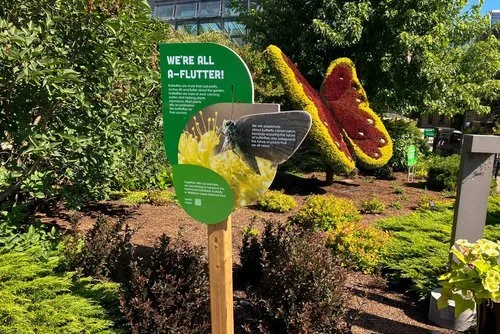
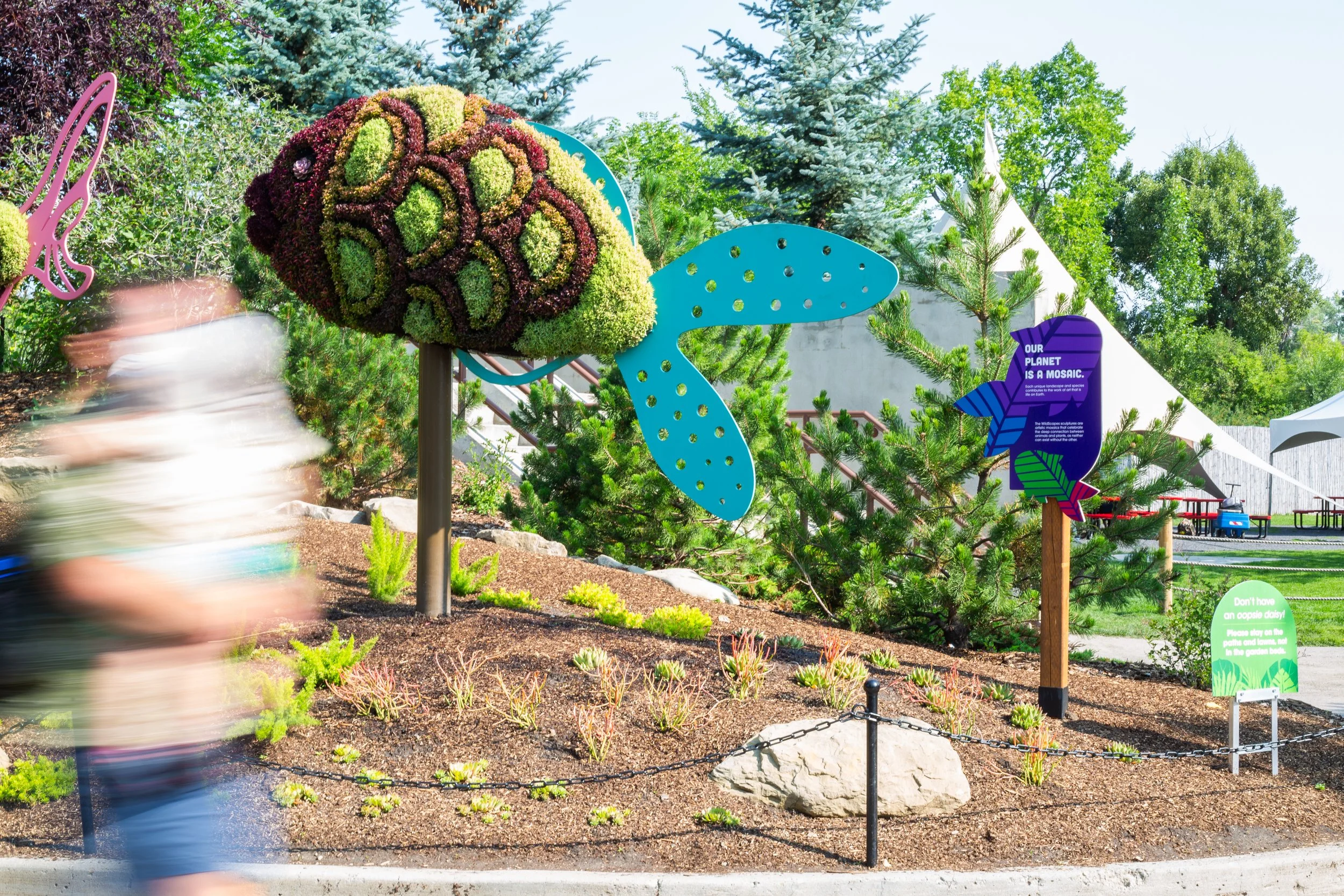
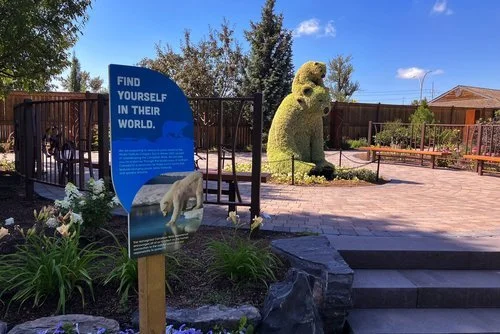
During construction within the Canadian Wilds zone at the Wilder Institute/Calgary Zoo, WildScapes was introduced as a temporary attraction to maintain visitor engagement and spotlight endangered species. Installed within the Dorothy Harvie Gardens, WildScapes featured large-scale plant sculptures forming animal figures such as polar bears, tigers, and giraffes. The signage system was designed to support an immersive conservation experience while guiding visitors clearly and intuitively through the space.
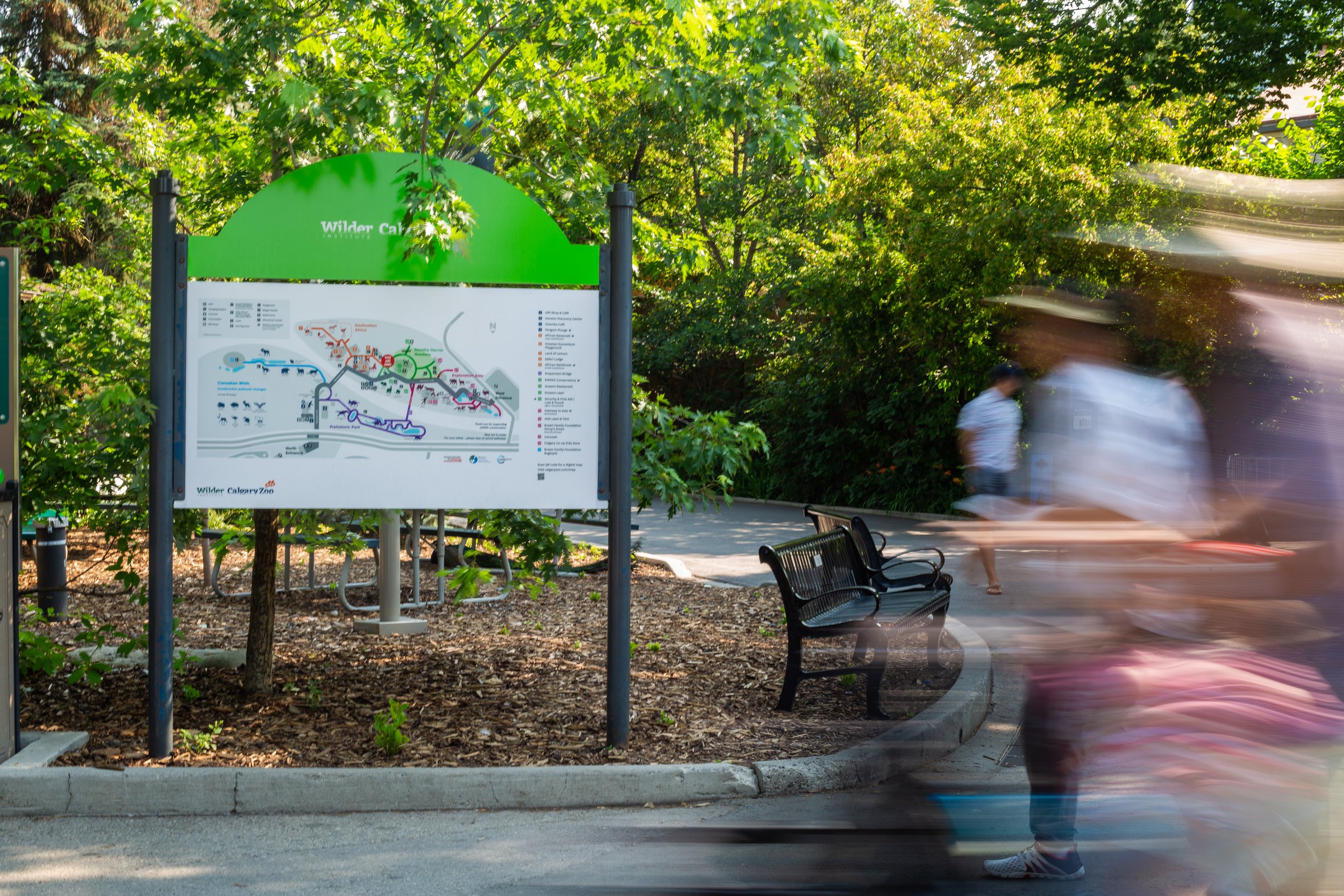
As graphic designer, I led the interpretive and wayfinding design, developing a cohesive signage system that included updates to the zoo’s primary map and on-site directional signage throughout the grounds.
The interpretive and environmental signage package included:
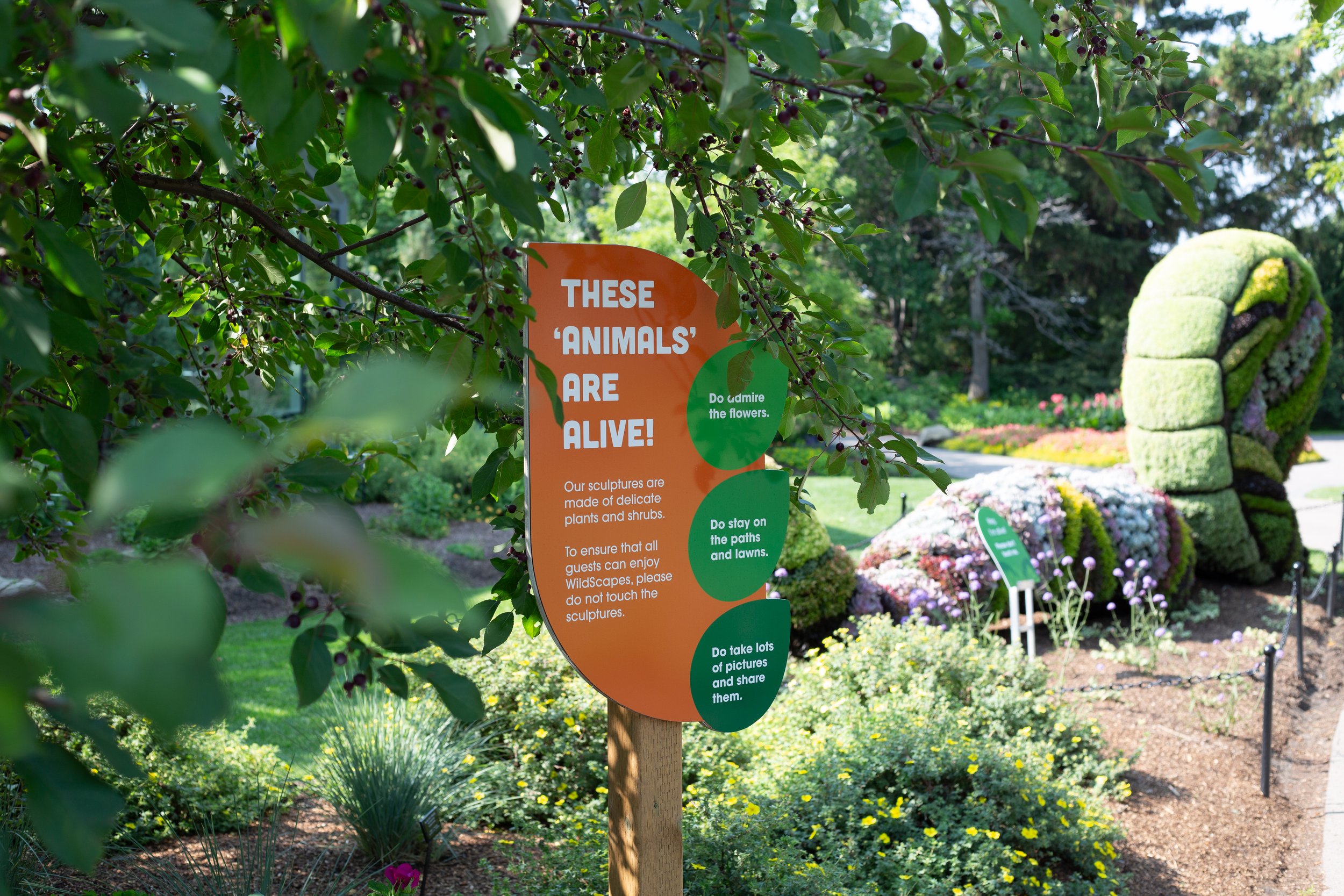
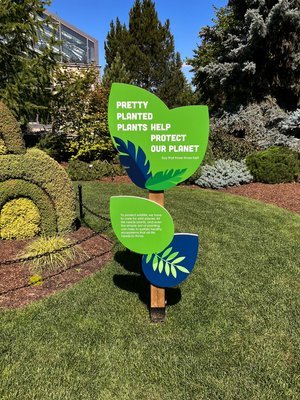
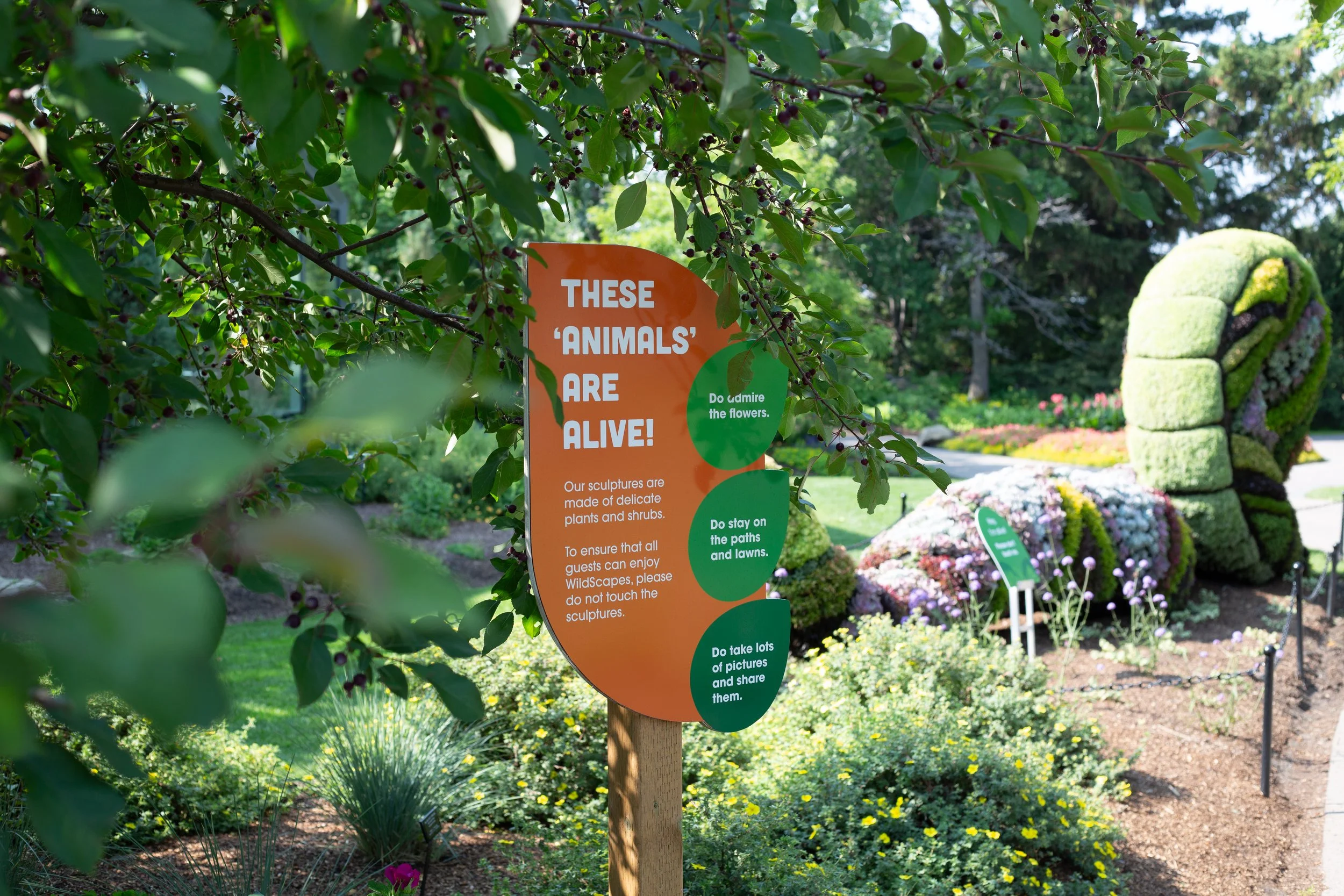
Safety signage to ensure the safety of both guests and living plant installations
Educational signage highlighting featured species and related conservation initiatives
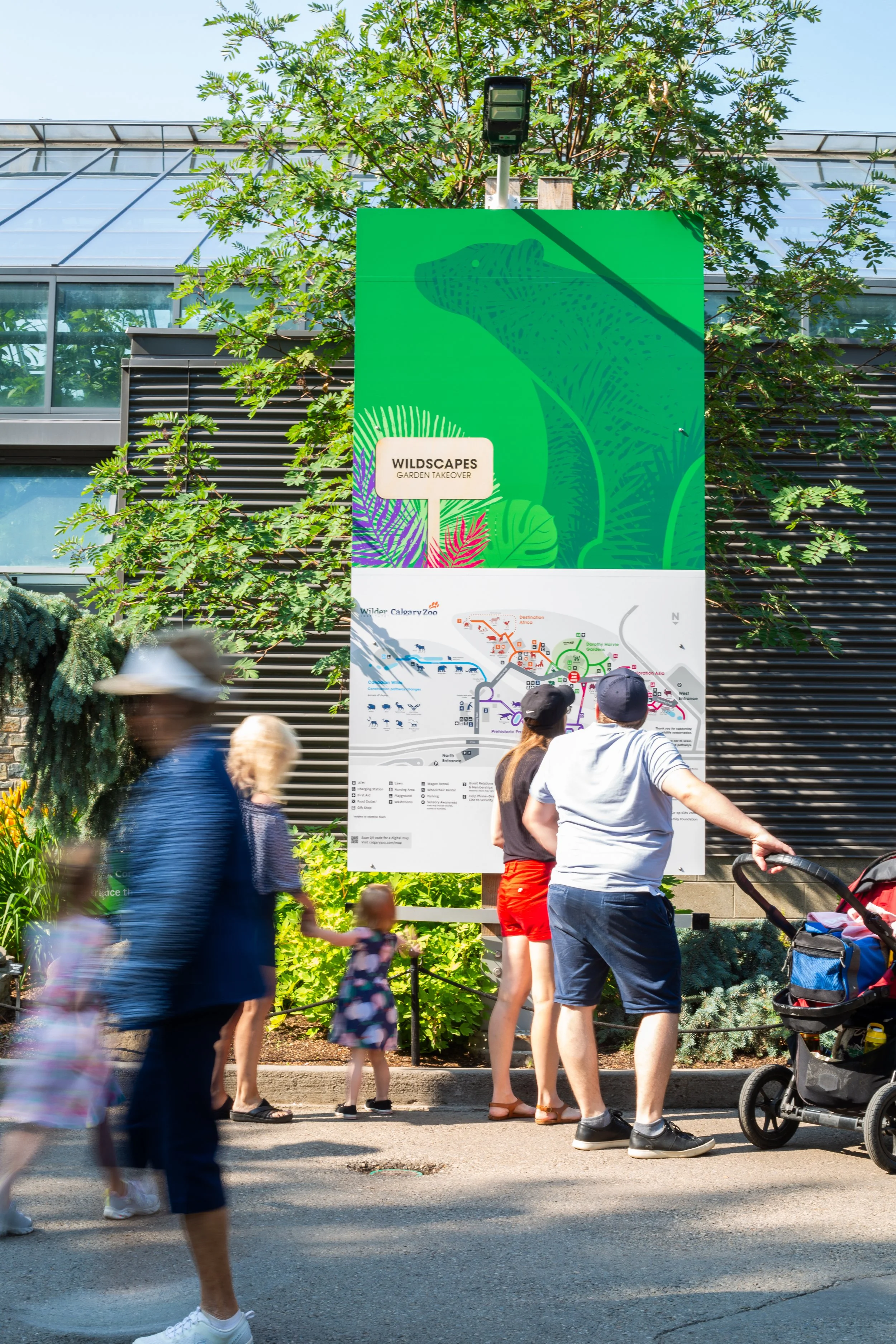
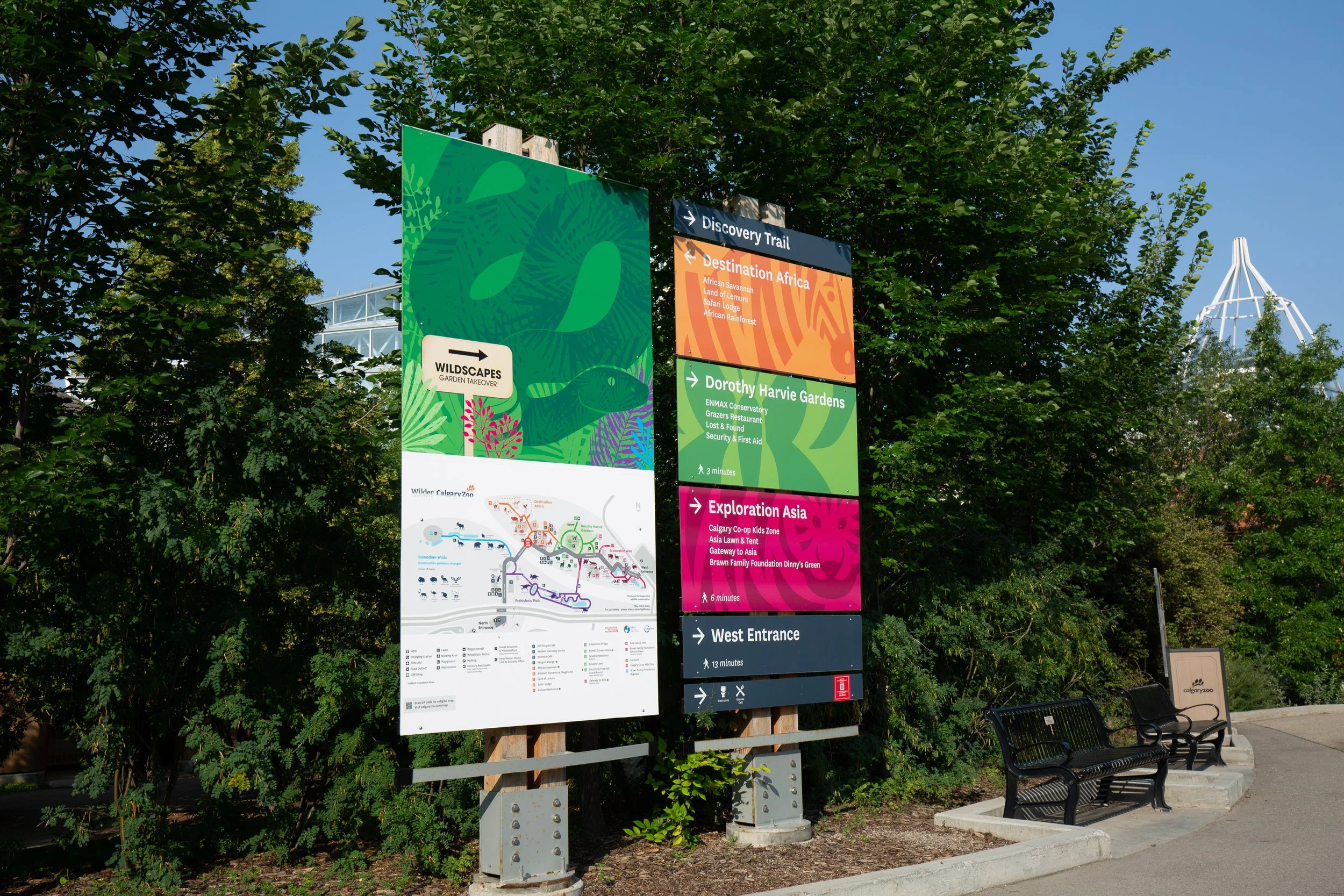
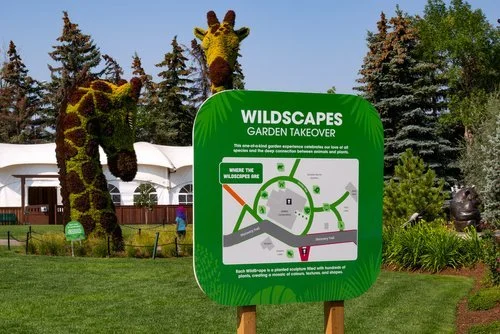
Wayfinding signage, including directional signage and an updated zoo map, to help guests easily navigate the WildScapes experience
Creative Direction
Inspiration for the overall WildScapes design was drawn directly from botanical forms, leaves, petals, and organic silhouettes, introducing a playful quality to the signage while remaining contextually grounded. Custom die-cut, sculptural shapes echoed the surrounding landscape, allowing educational content to integrate seamlessly into the garden environment rather than feel applied or intrusive.
The header typeface aligned with the WildScapes advertising campaign to ensure visual continuity and immediate recognition upon arrival, while body copy followed the zoo’s established brand typography standards. The color palette was derived from variations of the zoo’s core brand colors, maintaining institutional consistency while allowing for tonal flexibility within the natural garden setting.
Wayfinding
The wayfinding component required a broader systems approach. Updates to the Zoo’s primary map reflected shifting pathways and construction boundaries, while new on-site directional signage ensured intuitive navigation throughout the zoo. New icons were developed for the polar bear, snake, and butterfly, while existing branded foliage elements used across the park were thoughtfully integrated into the signage system. This approach reinforced visual consistency and strengthened a cohesive, recognizable on-park identity.
Impact
From concept development through production and installation, the project required close coordination across teams to ensure clarity, durability, and environmental harmony. The final system reinforced the Zoo’s conservation mission while maintaining a seamless and immersive guest experience during a period of operational change.